
You work while the world sleeps.


Why is night shift so hard on your body?
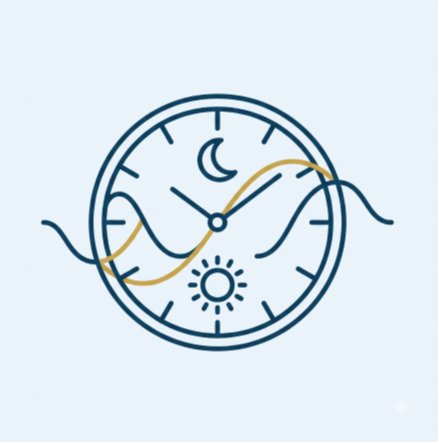
Your circadian rhythm is set mainly by light. Night shift asks your body to be alert while its internal clock is preparing for sleep, and to sleep while daylight is signaling it to wake up. That mismatch affects sleep quality, hunger hormones, digestion, mood, and recovery. It isn't a willpower problem. It's biology.
Sleep
Daytime sleep is often shorter and lighter.

Hunger
Appetite shows up at unexpected hours.
Digestion
Your gut runs on a clock too.

Energy
Alertness dips in the early-morning hours.
Recovery
Rest takes longer to "count."
 25+ Years in Overnight Sleep Medicine
What sustained me wasn't willpower. It was rhythm.
There was a season when I worked six nights a week, often 65 to 70 hours. I don't recommend it, and it isn't a badge of honor. But it taught me one of the most important lessons of my career: I couldn't control my schedule, but I could control my rhythms.
- ✓ I went to bed at about the same time every morning.
- ✓ I ate my meals on a consistent schedule during my shift.
- ✓ I kept my bedroom cool and quiet.
- ✓ Berry smoothies became my "morning" routine before and during shift.
- ✓ I stayed hydrated with water infused with cucumber, lemon, and mint.
Even my digestion settled into a rhythm. Those habits gave my body consistent cues long before I understood the science behind them.
How can night shift workers sleep better?
Night shift workers sleep better by giving their body clock consistent cues: a regular sleep window after every shift, a cool, dark, quiet bedroom, managed light exposure on the way home, and meals at predictable times. Night Shift Rhythm™ builds those cues around your schedule instead of fighting it.
Anchor your sleep window
Go to bed at about the same time after each shift, and protect that block.
Make it Cool. Dark. Quiet.
The CDQ Effect™: blackout curtains, a cool room, and white noise or earplugs.
Manage light
Limit bright light on the drive home and dim lights before sleep.
Eat on a schedule
Keep meals at consistent times during your shift so your gut has a rhythm too.
Hydrate on purpose
Steady water intake supports focus and energy through the night.
Plan your days off
Keep schedule changes gradual so your body clock can keep up.
What is Night Shift Rhythm™?
Night Shift Rhythm™ is the home of all SNW night-shift education, resources, and organizational solutions. It isn't about living like a day worker. It's about finding the sleep, eating, light, and recovery rhythms that work with your schedule and support your long-term health. Individuals can start with the resources below, and employers can bring Night Shift Rhythm™ to their teams as a customized organizational solution.
Night Shift Rhythm™ resources

Night Shift Survival Guide™
Practical strategies for sleep, food, and energy on nights.

Night Shift Eating Protocol™
What and when to eat on overnight schedules.

Light & Rhythm Protocol™
Use light and darkness to support your body clock around your shifts.
Night Shift Rhythm™ for your workforce
For employers with overnight, rotating, and nontraditional work schedules, Night Shift Rhythm™ becomes a customized organizational solution: education and practical strategies built around your workforce, your schedules, and your goals.

You don't have to navigate the night shift alone.
A free Facebook community for night shift workers, rotating shift professionals, healthcare workers, first responders, manufacturing employees, and anyone working non-traditional hours.
- ✦ Weekly rhythm tips grounded in sleep science and real-world experience
- ✦ Practical strategies for better sleep, smarter eating, and steady energy
- ✦ Encouragement from people who understand shift work
- ✦ Updates on new resources, workshops, and programs from Coach Lori

Night shift sleep and energy
What is the best sleep schedule for night shift workers?
+
For many night workers, the most helpful approach is one consistent sleep block soon after each shift, in a cool, dark, quiet room, with a similar routine on days off when possible. Consistency gives your body clock the clearest signal.
What should I eat on night shift?
+
Aim for meals at consistent times, with a balanced meal before your shift and lighter, nourishing options overnight, such as fruit, vegetables, protein, and water. The Night Shift Eating Protocol™ covers this in detail.
Is it normal to feel exhausted working nights?
+
Yes. Night work runs against your circadian rhythm, so fatigue is a common biological response, not a personal failing. Rhythm-based strategies can help, and persistent sleepiness is worth discussing with your doctor.
Does working nights affect long-term health?
+
Research links long-term circadian disruption from shift work with higher risk of sleep problems, metabolic issues, and cardiovascular strain. Consistent rhythms around sleep, meals, and light can help support your health.
Is the Night Shift Collective free?
+
Yes. The Night Shift Collective™ is a free Facebook community for anyone working nights or rotating shifts.
Can my hospital or company bring this to our staff?
+
Yes. Night Shift Rhythm™ is available to employers as a customized organizational solution for overnight, rotating, and nontraditional schedules. Pricing depends on your audience, format, and scope, so every engagement starts with a consultation.